To check you current grades or to see if you are up to date on all of your assignments click this link: SnapGrades

Pages

Thursday, April 7, 2011

Baruch Blumberg, Nobel winner and recent speaker at McCall, dies at 85

Baruch Blumberg, 85, a Philadelphia researcher who won the Nobel Prize in medicine in 1976 for his work on hepatitis B, died Tuesday in Moffett Field, Calif.

He collapsed after giving a speech at the International Lunar Research Park Exploratory Workshop being held at the NASA Ames Research Center, said his daughter Anne Blumberg. Her father, who was the director of the NASA Astrobiology Institute from 1999 to 2002, had been in good health and died of an apparent heart attack, according to NASA. "He was as busy last week as he was his whole life," his daughter said.

Dr. Blumberg, who had worked at Fox Chase Cancer Center since 1964 and still maintained an office there, discovered the hepatitis B virus and later helped develop a vaccine against it. The vaccine, which is now made in a different way, was approved by the FDA in 1981. Dr. Blumberg's work also allowed blood banks to screen for hepatitis B, a blood-borne virus. It can cause serious liver disease, liver cancer, and death.

"His vaccine and his research have saved hundreds of thousands of lives," said Ann Skalka, basic science director emerita at Fox Chase in Northeast Philadelphia.

Friends and family described him as an unusually curious, outgoing, funny, affable, and adventurous man who traveled widely and loved walking in his beloved Philadelphia. He had given up active research in recent years but still had the title of senior adviser to the president and CEO at Fox Chase and university professor at the University of Pennsylvania. At NASA, he had focused his formidable intellect on studying the possibility of life in space.

Dr. Blumberg, who was known as Barry, was also the current president of the American Philosophical Society, a Philadelphia-based learned society founded by Benjamin Franklin.

Dr. Blumberg traveled the world for his research and was particularly interested in Lewis and Clark's journals, which were part of the society's collection. He started a Lewis and Clark grant program to help young scholars do field research, Annie Westcott, director of meetings for the group, said.

Monday, March 21, 2011

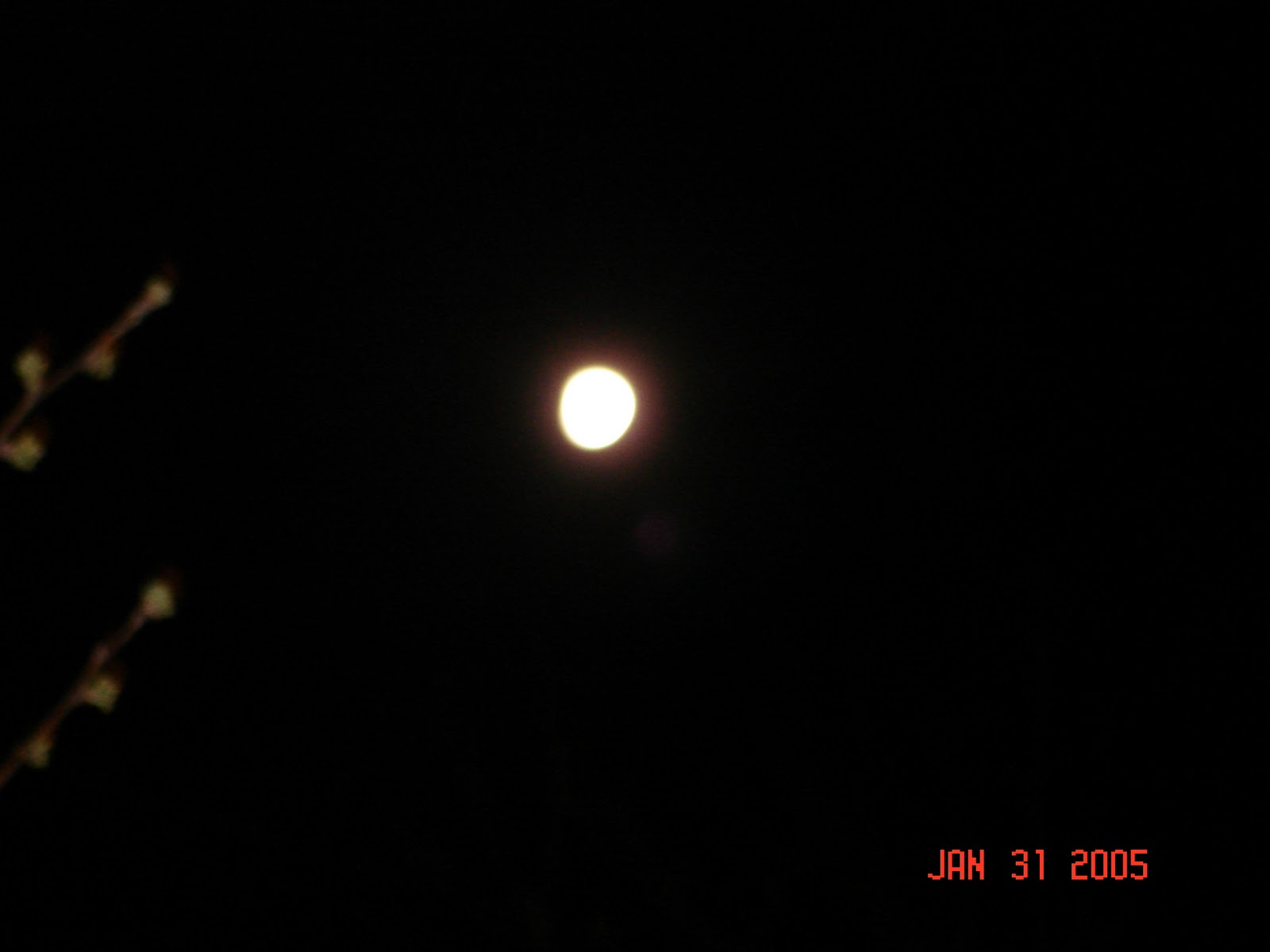
Supermoon Astronomy Photographs

Supermoon

From Wikipedia, the free encyclopedia
Jump to: navigation, search


A perigee-syzygy of the Earth-Moon-Sun system or "supermoon" is a full or new moon that coincides with a close approach by the Moon to the Earth. The Moon's distance varies each month between approximately 357,000 kilometers (222,000 mi) and 406,000 km (252,000 mi) due to its elliptical orbit around the Earth (distances given are center-to-center).[1][2][3]


Student submitted Supermoon Photos:


By Henry R. 7th Grade


By Keanne W. 7th Grade


By Qianyi Z. 7th Grade


By Xin L. 7th Grade

Tuesday, March 8, 2011

2010-2011 Carver Science Fair

I am patiently waiting as J. Dickie, An. Zheng, N. Huang, B. Mach, J. Davalos, Y. Liu, S. Khoa, J. Zhao, V. Russell, S. Tang, E. Liang, Ar. Zheng, and T. Smith are presenting to the judges. Good luck!

Thursday, February 17, 2011

Final Report Template


Title of Project

(Cover Picture or Clip Art From the Internet)

By: Student Name


Abstract

250 word or less short summary of the hypothesis, materials & procedures, results, and conclusion

Question

The problem or question that you are asking to start the scientific process. Must be a testable question.

Variables

What is the one variable that you will be changing? What are variables that you will not be changing that will remain the same for all trials.

Hypothesis

The educated guess to answer your question.

Background Research

Includes all the research you did from your research plan

Materials

Listing of the materials needed for your project

Experimental Procedures

Can be copied from your science buddies project idea page

Data Analysis

Add a table or a graph with your numerical data. Label and include units.

Conclusion

Describe the results of your experiment in words and tell the reader if your hypothesis was correct or not.

Ideas For Further Investigation

What you would change if you did it again, or a new question?

Acknowledgments

People to thank for helping you

Bibliography

Five sources formatted in APA Format. See the link on www.mccallscience.com.

Monday, February 14, 2011

Concentration Maze Game

Instructions:
1) Take your Heart Rate by feeling your pulse on your wrist.
2) Count how many beats in 30 seconds then multiply by 2 to get your beats per minute.
3) Then play the concentration game and get to level 5.
4) When you get to level five take your heart rate again.
5) Leave your Name and your heart rate before the test and after the test as a comment to this blog post.

How To Measure Your Pulse

Taking your pulse is easy. It requires no special equipment, however, a watch with a second hand or digital second counter is very helpful.

1. Turn the palm side of your hand facing up.

2. Place your index and middle fingers of your opposite hand on your wrist, approximately 1 inch below the base of your hand.

3. Press your fingers down in the grove between your middle tendons and your outside bone. You should feel a throbbing - your pulse.

4. Count the number of beats for 10 seconds, then multiply this number by 6. This will give you your heat rate for a minute.

Example:

If you count 12 beats in the span of 10 seconds, multiply 12 X 6 = 72.

This means your Heart Rate or pulse, is 72 (or 72 beats per minute).

Another popular way to measure pulse rate is by measuring it at the neck (carotid pulse). This is especially convenient during exercise. The formula is the same as above, however, when taking the pulse at the neck, place your fingertips gently on one side of your neck, below your jawbone and halfway between your main neck muscles and windpipe.

Taking your pulse upon rising in the morning, or after sitting without activity for about 10 minutes, is know as your Resting Heart Rate.

Sunday, January 2, 2011

How to Cite Your Sources in Your Bibliography

Many of you are asking how to cite your 5 (at least) sources for your Bibliography.  The link below has the format that is preferred (APA) and instructions for how to fill properly show where you got your information.

How to Format Your Bibliography

Remember that of your 5 sources 1 has to be something other than a website.  There are many sources of informative texts that would relate to your topic in the school Cybrary or at your local branch of the Phila Public Library.

Friday, December 17, 2010

Science Fair Research Plan Template


Science Fair Research Plan Template  (Due January 7th)
(Must be typewritten and submitted electronically)
(To be completed and approved by Mr. Knoflicek prior to experimenting)
By First Name Last Name


I.  Title  _____________________________________________________________________


II.  Problem (question) ________________________________________________________


III.  Hypothesis (If........, then…….. will happen)


IV.  Research (notes and information written in your own words and the sources from which you obtained it – I will confirm that your research is in your own words by using a plagiarism checker.  If you plagiarize you will be given a zero and will be written up for academic dishonesty (Level 1 Offense))

    1.  source: _________________________________________________________________

          information: ___________________________________________________________

    2.  source: _________________________________________________________________

          information: ___________________________________________________________

   3.   source: _________________________________________________________________

          information: ___________________________________________________________
     
   4.  source: _________________________________________________________________

         information: ___________________________________________________________

    5.  source: _________________________________________________________________

        information: ___________________________________________________________


      V. Experimental Plan/Procedures  (written step-by-step)


    VI.  Materials Needed


    VII.  Variable (this is what is actually being tested- the one thing that will change)


   VIII. Controls (the things in the experiment that don't change)


      IX.  Data (how will the data you collect from your experiment be organized and displayed?) (In a graph, chart or table)
       
Rubric based on these nine (I through IX) Sections with Research counting 2 points.  

Tuesday, November 30, 2010

Example Science Fair Projects by the Branch of Science You Selected

 Science Fair 2010-2011


Science Fair Contracts are due November 30th.  Work with your parents to be sure that you have all the things you need to answer your question for your science fair project or you can get them.


Step #1  Deciding on a Project


Brainstorm 10 things that you are interested in and then pick the top four things and start asking questions about them.  Questions can be who, what, where, when, or how.   You can then get some help finding questions that relate to your topic/branch of science using the following websites:


General Links for Project Ideas
http://www.sciencebuddies.org/science-fair-projects/science_project_ideas.php
http://www.juliantrubin.com/branchesofsciencefair.html
http://www.usc.edu/CSSF/History/2005/Panels/
http://www.all-science-fair-projects.com/category0.html
http://chemistry.about.com/od/sciencefairprojects/u/sciencefair.htm#s1

Forensics/Forensic Anthropology 
Fingerprint Heredity
Ballon Bloodspatter
Hot Dog Mummification
Forensic Resources

Archeology
Archeology Wikipedia Article

Astronomy

Astronomy Projects
Astronomy SB Projects

Biotechnology
Biotechnology SB Projects

Nuclear Physics
Nuclear Physics Projects

Biology
 Biology Projects

Geology
 Geology/Earth Science Projects

Genetics

Zoology
 Zoology Projects

Medicine
 Medicine Projects
Alternative Medicine Projects
Medicine Resources

Marine Biology
Marine Biology/Ecology Projects

Civil Engineering
Engineering Projects

Cardiology
Circulatory System Projects
Heart Disease Projects

Astrophysics
Astronomy, Astrophysics, and Cosmology Resources
Astronomy Projects

Electrical Engineering
Electronic Component Projects
Electronics Projects
Electricity & Electronics SB Projects
Electrical Sciences Projects

Bacteriology
Bacteria Projects

Cryptozoology

Crypto Resources
Cryptozoology Resources
Crypto Link on the Web

Botony
Botany projects

Opthamology
 Wikipedia Article
Medicine Resources
Eye and Visual System Projects

Microbiology
Microbiology Projects
Microbiology Experiments
Bacteria, Virus, Fungi & Algae Projects

Musicology
Music Projects
Music SB Projects
Sound & Hearing Psychology Projects
Wikipedia Article

Photography, Digital Photography & Video Science
Photography and Video SB Projects

Physics
Physics Projects

Air Pressure
How to make a simple Hovercraft
Hovercraft Research
30 Minute Hovercraft
More Complex Hovercraft
Medium Effort Hovercraft
List of all Hovercraft projects at Make 'zine

Structural Engineering
Engineering Projects
Building Projects

Oceanography
Oceanography Projects

Chemistry
 Chemistry Projects
Chemistry SB Projects

Sociology
Psychology Projects

Computer Science
 Computer Science Projects

Paleontology
Earth Science/Geology Projects
Paleontology Resources

Food Science
Food Science Projects
Cooking & Food Science SB Projects
Food Science Experiments
Food Science Resource

Aerodynamics
Aviation & Aeronautics Projects
Aerodynamics & Hydrodynamics SB Projects

Cosmetic Chemistry
 Cosmetics Projects

Rocketry
Rocketry Project

Numerology
Numerology Wikipedia Article
Astrology Resources

Entomology
Incests Projects

Meterology
Meterology Projects

Hydrology
Water Projects

Mycology
Mushroom Resources
Fungi Projects

Fluid Dynamics
Fluid Projects

Primary Grade Full Class Science Fair Project Suggestions
Fingerprint Analysis

Tuesday, November 9, 2010

Games that indirectly help you learn :)


Textbook Access

As a reminder the textbooks can be accessed by following these instructions:

Login as student on SchoolNet
http://phila.schoolnet.com/

Your username is your School District Student ID Number
Your Password is a 5 digit series of numbers and letters

Then click on the Textbooks K-8 on the left

Find your grade and the textbook you want to view.

Note: Use Safari as your browser if you are having difficulties

Monday, October 25, 2010

What is this pink goo?


This is the filler in mcdonalds "chicken" nuggets.  This material needs to be soaked in ammonia to kill the billions of bacteria.  The substance also needs to be bleached white to look more like chicken meat.  Why eat something this processed? 

Tuesday, October 12, 2010

Phase Change Diagrams

What is a phase diagram?

A phase diagram is a convenient way of representing the phases of a substance as a function of temperature and pressure. Below is the phase diagram for water.


Phase Diagram of Water


As seen above, one can determine from a phase diagram what state the water will be in at a certain temperature and pressure. For example, at 1 atm and 100ยบ Celsius both liquid and solid water will exist.

**Note that a phase diagram describes conditions and events in a closed system where no material can escape into the surrondings and air is present


The phase diagram of water is very different that the phase diagrams of other substances. One unique thing about water is that the boundary line between the solid/liquid sections has a negative slope, meaning that the melting point of ice decreases as the external pressure increases. This occurs because the the density of ice is less than the density of water, which is not true for other substances. For example, below is the phase diagram for Carbon Dioxide.

C02 phase diagram

Note that unlike water the line between the liquid/solid sections has a positive slope unlike water.

Below is the phase diagram for carbon. By defintition a phase diagram shows the different states that a substance could be in, and the temperatures and pressures at which it occurs. Carbon is different from the previous two because it can exist in different states as a solid:

The common graphite:     graphite  
And the more expensive diamond: Diamond


The reason diamond is more expensive is because of its rarity, which is clearly evident in its phase diagram.

diamond


As shown in the phase diagram above it takes huge amounts of pressure and temperature to form a diamond. While diamond can be formed artificially, it is too expensive to compete with the natural stores of the stones found in various parts of the world.
from http://bhs.smuhsd.org/science-dept/marcan/apchemistry/cool_phase_changes_diagram.html

When done go through these skill building questions at this URL http://www.science.uwaterloo.ca/~cchieh/cact/c123/phasesdgm.html

Tuesday, September 28, 2010

You are Here?!

Which of these links is a more accurate description of where you are? And why did you select it.

Milky Way

Branching Diagram

Answer by writing  a comment.

Monday, September 27, 2010

Study Island Assignments for Week of 9/27

Assignments have been added to your class lists under Study Island.  7th Graders have been assigned the unit on Natural Selection, and 8th Graders have been assigned Week of 9/27 Assignments (Properties and Sci Evidence) .  All of these testing questions will help you prepare for the science PSSA.  If you need help with any of the questions you may refer to the lesson in Study Island or use your textbook.

Your username is your first name followed by your last name without any spaces @mccall.
Example:
joesmith@mccall


Your password is your unique student ID number.


This first assignment will be due at the end of the day on Saturday October 2nd.  Let me know if you have any problems.

Mr. Knoflicek